The Very Ordered Existence of Merilee Marvelous

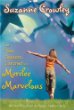
The Very Ordered Existence of Merilee Marvelous by Suzanne Crowley

Merliee Monroe has her life organized just how she wants it.  Her time is carefully allocated using a schedule of her own making.  She has a too perfect younger sister, a nasty grandmother, pretty average parents and an uncle who is very special to her. Merilee is NOT happy when Biswick comes to town.  He’s infiltrating her special places and disrupting her schedule.  His impact on her life is enormous and permanent.

This book is generally shelved as J for Juvenile.  I would strongly disagree with that classification.  I can’t see the appeal of this book to anyone below middle school, nor do I think the themes covered in it are generally topics that younger readers should encounter.  A very large portion of this book will be revealed in the content review section below, so if you do not want spoilers, you certainly shouldn’t read that.  On the other hand, before you give this to a child, please read the book yourself or review the content.

Written in the style of Southern novel that includes an overwhelming number of quirky characters, this book is going to be very difficult for many readers.  Crowley gives you all sorts of random back story for townspeople that you don’t really need to know.  It’s the kind of local color you’ll see in lots of books about the south.  It’s just not particularly suited for young children.  Furthermore, major topics include death and alcoholism, so tread carefully.

Sex, Nudity, Dating – Grandma refers to a woman as the town floozy even though there’s no evidence that she’d ever had a boyfriend.  A girl smooches boys and developed young.  When Mama climbs a tree, you can see her underwear and a kid shouts out that they are purple.  A woman tells Merilee that ” Kissing don’t last”.  Two sisters fight over a man (who is the husband of one of them?)  People sneak off to smooch.  Merilee thinks about kissing Gideon.
Profanity – “dumb,” “stupidness,” “retarded,” “idiot,” “spaz,” “jackasses,” “morons,” “darn,” “damn,” “my butt,” “oh my God,” “sucks,” “damnation,” A grave marker reads “Mute Idiot”, “dumb-ass,” “Ass.”  At one point Merilee worries that Biswick’s father will shout obscenities. When he does come he says he won’t stand at “no _____ing podium.” His poems evidently include “a whole bucketload of bad words.”  “crap,” “jerkfool,” “son of a gun,” “pissant,”
Death, Violence and Gore – Uncle Dal tells a story about a goat herder who died looking for a treasure.  It contains nothing gory, no details really, just that he never came home from looking for it.  A boy gets pinched on the elbow.  Grandma threatens to “flay” people’s butts when they misbehave.  A woman hears her husband died in the war and dies herself immediately after. The sheriff once accidentally shot off his baby toe.  A story is told where a dragon kills a child.  Mama gets hit by a car, but doesn’t die although Merilee spends a lot of time worrying about what if she had died and that she still might die.  Grandma’s mother was mentally ill in some way and tried to abandon Grandma, but did actually abandon Grandma’s younger sister.  The baby sister died.  Her uncle’s wife died.  Mr. Porter died in the bathtub.  Biswick’s father died and is found by Merilee, although she doesn’t initally know he’s dead.  Biswick’s mother was run over by an 18-wheeler, he mentions she got “squished”.  Veraleen’s daughter died.  Evidently if a frog hops on you it is measuring your shroud.  Frogs and armadillos are squished.
Drugs, Alcohol and Smoking – A neighboring town is called Whiskey.  Grandma says Merilee’s mother thought of her name while “high on the birthing drugs.”  A woman chews tobacco.  Biswick’s dad is in the cemetery surrounded by beer bottles.  His father slurs his words before taking naps and sends Biswick out with money.  A woman holds a cigarette holder and pretends to smoke. Biswick’s father is an alcoholic.  He drinks throughout the book, all types of alcohol, is arrested for public drunkenness and is found dead in a dump.  Biswick’s mother drank throughout her pregnancy and as a result he has Fetal Alcohol Syndrome (FAS).  Veraleen smokes throughout.
Frightening or Intense Things –Merilee says “God knows I don’t believe in him.”  Merilee is bullied. Her own grandmother obviously favors her sister. People at school throw wadded up paper at her.   A boy in the book had a hard childhood; his father left and his mother made up a lot of lies about his health.  His situation was reviewed and ultimately he returned to his mother’s care.  Grandma tells the kids if you watch someone disappear from sight you’ll never see them again.  A boy who wets the bed is made to sleep in it for days before his family will wash the sheets.  A mother is taken away from a family for being responsible for her child’s death.  Veraleen abandoned her family. Biswick’s mother left him alone at the apartment when she went and got run over by the truck.  Biswick has bruises all over his arm from his father.  Biswick and Merilee become lost and hide in a cave during a storm.

Posted in Teen, Tween | Tagged | Leave a comment

How to Talk to an Autistic Child

How to Talk to an Autistic Kid

This is a slim non-fiction book written by an middle school student with autism.  It is a super fast read and would be great for teachers, guidance counselors or anyone who wants to help facilitate relationships between children with autism and their peers. I’d also recommend it to elementary librarians for inclusion in their collections.

Daniel does try to point out that every child with autism is different, but sometimes overgeneralizes interests and abilities.  Ultimately though, the suggestions he offers on how to be a good friend are pretty universal.  Cute illustrations help to make the book even more user-friendly.

Great for: Encouraging and facilitating relationships between ASD children and their classmates or peer group.  It also may provide a good starting point for discussion with a child with autism about their interests and concerns and how they want to be perceived by their peers.

Sex, Nudity, Dating – None.
Profanity – None.
Death, Violence and Gore – None.
Drugs, Alcohol and Smoking – None.
Frightening or Intense Things – None.

Posted in Middle Grades, Primary Grades, Tween | Tagged , | 3 Comments

To Oz and Back

To Oz and Back: A Bones & the Duchess Mystery (Bones and the Duchess Mysteries) by Alexandra Eden

This is a truly awful book.  It is poorly written, boring, unrelatable, completely unaware of its audience and sometimes downright offensive.

Right from the start I found the book hard to get into.  The author uses incomplete sentences, which doesn’t read as “style” it reads as really bad, choppy writing.  There are other errors throughout which make you wonder if perhaps the editor hated the book as well and just wanted it to look as bad as possible.  I was also annoyed by the obnoxious explanation of phrases, for example “blind alley – an alley you can go into, but there is no way out of.”

Oh right.  The reason I was reading this in the first place? The character with Asperger Syndrome?  Well, she’s not in the book all that often  and our narrator doesn’t think that much of her.  While some characteristics that are typical of people with Asperger Syndrome are mentioned, you never really get a feel of what that means to Verity.  Although her nickname “duchess” evidently comes from how she carries herself, much more formally than other children.

Of course, she’s not the narrator, because it takes a lot of talent to write from the perspective of a character with Asperger’s.  No, the narrator is an adult male, which means that the opinions expressed and tone taken are not easy for children to connect with.  When you add in the fact that he’s not a particularly good person (he’s late on his rent, has been thrown off the police force for badmouthing his superiors and is trying to extort money from the parents of a missing child), you’re looking at a narrator that is also a really bad role model.

Just in case you were hoping for a silver lining, there is none.  The book is actually offensive in parts.  The author seems to have an unhealthy relationship with weight because characters’ weights are discussed throughout the books despite being irrelevant.  Ranging from a woman who is “probably a little heavier than when she was married, but not too much” to a man who has a “load of lard on his bones that would have slowed down a bear,” there are a lot of negative weight messages.  Of course, there’s some old-fashioned sexism to spice things up when a man observes that a girl can’t throw well and remarks “what good’s a girl who can throw a ball – who needs it?”  One of Verity’s friends who is perhaps a bit socially awkward is constantly referred to by the narrator as a nerd.  Winning remarks include “”Nerd just kept on nerding.” The narrator also doesn’t particularly like children.  That’s what most kids are looking for in a book right?  An adult narrator that doesn’t like children?

And then of course, there’s the way the author chooses to handle disabilities and neurological differences.  Early in the book the narrator tells us “In my day we had a kid or two in school who was slow, but we didn’t have any fancy names for them.”  Yes, because calling someone “slow” is much better than having some stupid politically correct fancy name.  But it’s the moment where he he says about Verity  “I knew she was handicap [sic]…” that I wrote off not only the author and editor but the publishing house as well (Allen A. Knoll, you should be ashamed).  First of all, a person is never a handicap.  If you are looking for a perhaps outdated phrase (and this book shouldn’t be, it was published in 2003) you may have meant that she “has a handicap” but really, you’re not supposed to say that.
Sex, Nudity, Dating – Bones tells you that he he’s had a few girlfriends, that women are supposed to be attracted to men in uniform and that he hasn’t attracted any lately.  Why do we need to know this?  Dr. Trexler kisses his wife upon returning home from work.  Arvilla’s parents are divorced, her father left when she was five.  Her mom won’t remarry because the alimony payments will stop.  She has a boyfriend though, who evidently doesn’t want to raise someone else’s kid.
Profanity – “dumbest,” “Lord knows,” “dumbbells,” “God,” used in a non-religious context, “for heaven’s sakes,” “dummy,” “screwed up,” “heck,”
Death, Violence and Gore – A man admits he’s been in some fights.  The book wrongly states that kidnapping across state lines is punishable by death.
Drugs, Alcohol and Smoking – Verity’s father converted a barroom to a soda fountain. “Instead of beer and whiskey they offered ice cream sodas and banana splits.”   It is mentioned that ice cream is not as profitable as alcohol.  He has a sign that reads “Drinking is not cool. Smoking is suicide and there are faster ways.  Drugs are for dumbells.”  Mr. Easterbrook drinks an alcoholic beverage.
Frightening or Intense Things –A child is missing.  While most of the speculation is about kidnapping for ransom, it is mentioned that someone might have kidnapped her to hurt her.”  Bones was fired, evidently for bad mouthing his bosses. He’s supposed to be a sympathetic character, but kids will have trouble with liking someone they know is doing something wrong. He’s also behind on his rent. Arvilla’s mother mentions missing a shrink appointment.  They withhold info from the FBI.  He speculates that it’s unlikely to find someone alive.  Bones considers the possibility that a father would harm his own daughter to avoid paying child support.  He also orders kids to withhold information from the police.

Posted in Tween | Tagged , | 1 Comment

The Case of the Prank that Stank

The Case of the Prank that Stank #1 (Wright & Wong) by Laura J. Burns and Melinda Metz

Agatha befriended Orville in the second grade because she couldn’t stand how Orville was getting bullied. Five years later, in an ironic twist, Orville just might be her entree into the popular crowd.  The football team needs some technical help with a major stunt they want to pull for an upcoming game and they think Orville is the guy to work out all the details.  Since Orville doesn’t really deal with outsiders, they recruit Agatha too.  Agatha is in heaven, she finally has a chance to be cool.  But at the big game, the prank goes horribly wrong.  What was meant to be a few sparks seems to have turned into a huge fire.  Agatha is certain the fire can’t be due to a mistake on Orville’s part, but then, if it wasn’t his fault, whose was it?  She and Orville are determined to get to the bottom of the mystery.

As a mystery goes, this was pretty average. What sets it apart from other books is that Orville has Asperger’s Syndrome.  This is dealt with in a very warm and accessible way.  He does face bullying, but has a dear friend and protector in Agatha.  Best of all, it’s not an “issues” book.  It’s just a regular mystery which happens to feature a character with Asperger’s Syndrome.

I found the writing underwhelming at points, highlights include: “If I was”, a rather bizarre reuse of the phrase “silver bird of popularity” and a slightly off analogy,”straight as Cousin Wong’s hair”.

Although the characters are in seventh grade, the reading level would be fine for strong readers in third grade. The book’s content would be appropriate for a younger audience, and may even seem young for on-level seventh grade readers.  I’m setting the ideal audience for this as Grades 4-6, especially students that prefer reading not be strenuous.

Great for: Showing a friendship between a character with Asperger’s Syndrome and a neurotypical peer.

Sex, Nudity, Dating – In trying to describe Orville’s single minded nature, Agatha points out that you could dance around naked in front of him without him noticing.  Agatha has a crush on a football player, as do other people.  Another girl is mad because a boy broke his date with her.
Profanity – “doo-doo head”, “retardo,” “retarded,” “jerk,” “dweeb,” “shut up,” “freak,” “morons,” “idiot,”
Death, Violence and Gore – Agatha threw her backpack at a boy.  A fire gets out of hand and poses a danger to many people. One girls worries that people could have been killed (everyone was fine).  Agatha threatens a bully with a bloody nose.  Two boys have a fist fight.
Drugs, Alcohol and Smoking – None.
Frightening or Intense Things – None.

Posted in Middle Grades, Tween | Tagged , , | Leave a comment

April is Still Autism Awareness Month

Last year I was able to devote an entire month to books featuring characters with ASD.  This year I am proud to continue review these books.  Please forgive the reposting, but this is what I wrote last year about awareness and how you can learn more, or better yet, help!  If you’re interested in previously reviewed titles, click here.

April is Autism Awareness Month.  As we see more and more children who have been diagnosed with these spectrum disorders I’m thrilled to see that there are fiction books out there that address the topic, whether it be writing from the perspective of someone who has a spectrum disorder or about how other people cope when someone they love is diagnosed as autistic.  This month I’ll be reviewing some of those selections.  Not every book is clear about what the character’s diagnosis is, so in some cases I’m using my best judgment.  I can promise that there are some great books though and I’m eager to share them with you.  Below is some more information about these spectrum disorders and some links you may want to check out if you’re interested in learning more, or even if you want donate to make a difference.

Autism is a spectrum disorder, meaning that individuals diagnosed with autism can have very different symptoms and abilities.  It is a developmental disorder characterized by delays in communication, socialization, and behavior.  The autism spectrum is composed of three diagnoses:  Autism, Pervasive Developmental Disorder – Not Otherwise Specified (PDD – NOS) and Asperger’s Syndrome. There are proposed changes to these diagnoses, which will be put into effect in May 2013.  You can find information about these changes here.

Asperger’s Syndrome is what many people think of as high-functioning autism.  It is diagnosed when there is no language delay in early childhood but there are difficulties in social interaction and behavior.  People diagnosed with Asperger’s can sometimes show an increased interest in one or two subject areas and want to mainly speak about those things.

PDD-NOS is diagnosed when someone has delays in the three areas named above, but doesn’t meet the criteria for Autism or Asperger’s. People diagnosed as PDD-NOS can have more mild or severe delays that people with autism.

NYU Child Study Center is a great resource with lots of information.  Don’t miss their Questions and Answers section which clarifies the three diagnoses I mentioned above, responds to the question of possible causes and addresses treatment options.

Autism Speaks will be especially helpful to families who believe they are facing an autism diagnosis or have just received one. Especially noteworthy are their downloadable, free toolkits for families that are in the first 100 days after receiving a diagnosis. It’s a time that can be very stressful and gut wrenching, so having information at your fingertips from a reputable source can help people cope.

The Center for Disease Control and Prevention has a fact page that includes which type of specialist your doctor should refer you to if there are concerns, as well as contact information for early intervention (who provides free evaluation and assistance for children under age three) and who to contact if your child is over three and you’re in need of help.

I cannot stress enough how much it helps children to be receiving assistance as soon as possible.

Yale School of Medicine has a great questions and answers page.  It includes:  your risk of having a second child with autism if one has been diagnosed, how to help your child communicate if their verbal development is behind and their official stand on the drug secretin.

If you want to help out further by donating:

Autism Society has a link (check out their stories section while you’re there to get a sense for how widely differing the lives of people with autism can be depending on severity).         The Autism Society tends to be focused on improving the lives of those with autism.

Autism Speaks has many ways for you to get involved. They too have a section called in their own words which shares real life stories of people who are living with autism.                 Autism Speaks tends to be focused on research and treatment.

The Autism Science Foundation also funds research projects.

I would like to thank two of my friends (you know who you are) that are far more well-versed in these issues than I am.  They have helped me find the information I’m passing along to you.

Posted in Uncategorized | 2 Comments

Opening Day!

Baseball season starts in just 2 days!!  Are you ready?  I’m afraid I’m not reviewing any baseball books this month, but check out this great list of books about baseball I’ve already written up.  Play ball!

For Primary Grades
Baseball Saved Us by Ken Mochizuki – review

All-Star Fever by Matt Christopher – review
You Never Heard of Sandy Koufax?! by Jonah Winter – review

The Dog that Called the Pitch by Matt Christopher – review

For Middle Grades Students and Tweens
Keeping Score by Linda Sue Park  – review

The Prince of Fenway Park by Julianna Baggott – review

Jackie & Me by Dan Gutman – reviewstrong warning on language

The Girl Who Threw Butterflies by Mick Cochrane – review

For Teens
All the Broken Pieces by Ann E. Burg – review

My Most Excellent Year: A Novel of Love, Mary Poppins, and Fenway Park
by Steve Kluger – review

Posted in Uncategorized | Leave a comment

Amelia Hits the Road

Amelia’s Are-We-There-Yet Longest Ever Car Trip by Marissa Moss
Amelia Hits the Road and Amelia’s Are-We-There-Yet Longest Ever Car Trip appear to be the same book, but I cannot guarantee it, having only Amelia Hits the Road in my possession.

Marissa Moss’s Amelia series is incredibly kid-friendly.  The books are made to resemble marble composition books and the font is even made to look like handwriting.  Each book in the Amelia series is supposed to be her own notebook that she uses to record what’s going on in her life.  The notebooks are decorated with full color illustrations throughout and all sorts of cool stuff.

Amelia, her mother and sister all hit the road on the way back to visit their old town, and in Amelia’s case, her best friend Nadia.  The notebook documents their trip through some great American landmarks like the Grand Canyon and Death Valley.

While this book is not wildly exciting for adults, the format is fabulous for enticing kids as well as encouraging them to write on their own.  It would considered on level for third grade and would be fine for advanced second grade readers.  As a whole, I know the series follows Amelia into middle school, so a quick preview of other titles may be in order before assuming they have similar content to what is discussed below.

Great for: Encouraging children to keep a journal.  This is also a great pick for readers who are transitioning up to chapter books but aren’t quite ready for a page full of teensy little font.  The combination of doodle-like illustrations, side notes and large handwriting-styled font will be great for readers as they move towards sustaining interest in text only titles.

Sex, Nudity, Dating – Amelia writes that her older sister looks “hot” in a bikini. Amelia meets a boy who her sister teases her about, but she just thinks it’s fun to talk to him.
Profanity – “jerk”, “stupid,”
Death, Violence and Gore – A decal on the front shows a man being kicked by a donkey.  Amelia and her sister hit each other while in the car.The constellation of Orion shows him with a bow and arrow and sword. A picture drawn by Amelia shows a man about to fall into the grand canyon. Amelia draws a skeleton in the desert while admitting they didn’t see one. They see a graveyard in a ghost town. Cleo pretends a chicken bone belongs to a minor. Amelia draws a devil when they visit Death Valley.  Cleo buys a hand held fan and Amelia wishes it would clip off the tip of her nose.  She also wishes her sister would be eaten by a mountain lion. Amelia writes a story in her journal about a boy who is afraid his grandparents will die.
Drugs, Alcohol and Smoking – A reference is made to the song “99 bottles of beer on the wall.”  A neon road sign shows a cocktail with olive.
Frightening or Intense Things – A sign outside a federal prison warns “do not stop for hitch-hikers.” They drive through Manzanar and briefly discuss the Japanese internment during World War II.
Other There is an incredibly brief mention of Ouija, tarot, palm reading, reading tea leaves and using magic 8 ball.

Posted in Middle Grades, Primary Grades | Tagged , | Leave a comment

The Map of Me

The Map of Me by Tami Lewis Brown

Margie feels lost.  Perpetually in the shadow of her brilliant baby sister Peep, worried sick about upsetting her Daddy and surrounded by her mother’s overwhelming collection of poultry, Margie feels thoroughly unimportant.  When she and Peep return home one day to discover their mother is gone, Margie takes charge, takes her father’s Ford, nearly kidnaps her sister Peep and heads out to search for her Mamma.  During their trip Margie does a lot of thinking, not only about her family but her place in it.

Readers are required to rely nearly as much on what remains unsaid as what is on the page.  Momma and Daddy are shown through the lens of their twelve year old daughter, which can make it very hard to determine just how neglectful they are.  Do you trust Margie’s perception of her father as a frightening man who clearly favors her sister?

The ending of the book was fortunately not a pat storybook wrap up.  But most importantly, it calls into question Margie’s portrayal of her father.

The content in this book skews towards middle grades.  The mother’s obsession with birds and poultry is a bit odd and may be confusing to readers.

Sex, Nudity, Dating – Margie has noticed a boy in her class. She has to dance a square dance with him and his fingers on her wrist make her arm tingle.
Profanity – “shut up,” “shoot,”
Death, Violence and Gore – Sometimes Margie wants to yank Peep’s hair. Peep kicks Maggie.  Daddy once chopped a snake to bits.  Margie worries that if she’s in trouble Daddy might pinch her too hard.  There is a reference to Cain killing Abel.  Peep announces that the majority of car wrecks result in at least one fatality.
Drugs, Alcohol and Smoking – Daddy smokes cigarettes sometimes.
Frightening or Intense Things – Feelings of abandonment are a major theme in this book.  The fact that the mother is the person who left may be frightening for some readers. The fact of an underage driver (particularly as young as Margie) will worry many adults.

Posted in Middle Grades | Tagged , , | Leave a comment

Going Bovine

Going Bovine by Libba Bray

It’s never easy for me to write up a book that I don’t enjoy.  So much of your personal enjoyment of something depends on your own interests and tastes.  Reading Going Bovine is one of the first times that this blog has felt more like a straight up labor than a labor of love.  I got to the point where I was telling myself that really, all the swear words that could have been used were used, and there were very few drugs that have gone unmentioned, so you all wouldn’t mind terribly if I just put this down and backed away right?

I valiantly read onward, which is probably for the best, seeing as the last few chapters were chock full of content you might want to know about.  So also please understand this as full warning that that the content area will be spoilerific.

So what is it that has me so disgruntled?  Going Bovine is the story of a completely self-absorbed teenage boy.  He just also happens to be dying of Creutzfeldt-Jakob disease (Mad Cow, but for humans).  In a Printz winning turn, Bray narrates from his perspective, the last ravaged thoughts of a brain being torn apart.  It’s just that this madness happens to manifest itself in a wild road trip which incorporates elements of Star Wars (cleverly rechristened Star Fighter), The Wizard of Oz, Norse mythology and video games.  If I were the type of person who recreationally used psychotropic drugs , I might be able to verify whether or not it is legitimately trippy, but I lack the experience to make an accurate assessment.

This is also not for the scientifically or mathematically illiterate.  With references to   paramecium, Calabi Yau, Shrodinger’s Cat and various other terms and concepts that may go over the head of many a reader, I hereby give anyone struggling with the text a free pass to abandon it at will.

Have you read this?  Did you like it?  Am I just not getting it because I am both humorless and old?

Other: Characters that are not white are almost always written as speaking differently.

Sex, Nudity, Dating – We know a jock has sex.  The school nickname is the Conquistadors and Cameron points out that perhaps the school is overlooking the fact that Conquistadors raped and pillaged.  Erections are had and discussed (and consequently “penis” and “hard-on” are mentioned).  Birth control pills are mentioned.  Cameron thinks about making a joke about abortion.  Masturbation is mentioned repeatedly. Cameron imagines girls naked. And imagines his father imagining girls naked. Cameron says his father would “cream himself” if he went out for lacrosse.  Rachel is a lesbian.  The boys talk about hot nurse sex. Gonzo thinks the name of a bus sounds “porny”, whatever that means.  There’s woman in New Orleans who is a man.  At one point Gonzo says that music is “raping his eardrums” which isn’t sexual, but it uses “raping” which I feel I need to acknowledge somewhere.  A reference to Catcher in the Rye states that Holden Caulfield visits prostitutes. Cameron’s father may be having an affair.  Girls and boys are in their underwear and then later remove it.  Pubic hair is visible.  People play strip poker and the stages of undress are described.  A garden gnome is dressed as a woman, photographed and shown on a fetish site.  Guys talk about scoring.  Guys look a pen that shows a woman in a bathing suit who loses her top when you flip the pen. Unprotected sex occurs, which is described in some detail, from foreplay onward.  It is revealed towards the end that a character is gay.  A second incident of sex occurs off-screen.
Profanity – “suckage/sucktastic”, “jerk,” “WTF,” “blow,” “bitching,”  “sumabitch”, “asshole,”  “badass,” “ass,””shit/ty,” “shithead,” “hell/ish,” “fuck,” which is used multiple times in multiple forms, “screwed,” “Oh my God,” “bullshit,”  “crap/py,” “craptard,” “bastard,” “Jesus,” “gosh-darn,” “damn,””Goddammit,” “dammit,” “dang,” “pissed/piss off,”  “retard/ed” used as an insult, “chickenshit,” “bejesus,” “Holy Shiite Muslim,” “pendejo,” “mierda,” “pajero,” and “bolo” which may or may not be profane of obscene, my Spanish isn’t that good.  A shirt shows a raised middle finger.
Death, Violence and Gore – Character almost died at Disney World.  A character has a spinal injury that prevents him from playing football.  In a simile something is compared to little kids dying of cancer.  There’s some violence on TV, kids bloody after a bombing.  Cameron also watches some roadrunner cartoons with their requisite anvil dropping and getting run over by trains.  There’s an accidental punch that leads to an actual fight.  A nurse’s daughter died of cancer when she was 5.  Gonzo says his mom will kill him for a)making an expensive call and b)taking a trip without telling her.  Gonzo worries about dying from an allergic reaction to shellfish or from mercury poisoning or from listeria at a salad bar.  Junior Webster dies after playing music with the Wizard of Reckoning.  Gonzo worries that there might be zombies in a graveyard.  They take a ride in a van, but they speculate the van owners might be serial killers.  Cameron gets hit over the head with a gun.  People are excited to watch a horror movie featuring cannibals,the movie is briefly recapped include gore and limbs in the fridge.  The gnome impales himself on a knife, but he’s immortal so it’s not bad. A cat is killed.  They are shot at.  A character will die in the future because he stepped on land mine.  There’s a reference to the sacrifice of Iphigenia.  There’s a fist fight.  Characters (multiple) die.
Drugs, Alcohol and Smoking – Dad drinks a vodka tonic.  Cameron mentions that the jocks act like they are on steroids.  A teacher is known as a lush and is fake quoted as asking for margarita.  People get stoned and offer weed to others.  Main character mentions that he doesn’t do acid.  A “head shop” is mentioned, which in case you don’t know is a store that sells drug paraphernalia.  Cameron is asked if he’s taken shrooms.  He is asked if he sniffs glue, uses meth.  A psychiatrist prescribes medication to Cameron based on what he hallucinates.  College boys drive drunk, tossing beer cans out the window.  A woman on the bus smokes and talks about how smoking can kill you.  Lots of people are drunk in New Orleans.  Many characters smoke cigarettes.  Legal drugs used for medical purposes are deployed in the proper manner.
Frightening or Intense Things – Jenna seems to have an eating disorder.  It is handled flippantly with comments about how she doesn’t ever eat.  Cameron is dying of Creutzfeldt-Jakob disease.  It is obviously incurable (hence the dying of it).  The disease causes him to see visions, often of fires or black holes.  Cameron is not big on God.  There area lot of illness related medical concerns, like being intubated etc.  Junior Webster spent time in the hospital after the war because of what he’d seen in the war.  There is mailbox smashing and some stealing.

Posted in Mature Teen, Teen | Tagged , , , | 2 Comments

Rules of the Road

Rules of the Road by Joan Bauer

There is little in this book that you would expect to find in a teen novel.  There is no romance, no conflict between friends and since it is summer, high school doesn’t really even factor in.  What you do have, is a coming of age book where a teenage girl learns the true value of herself.

Jenna has no boyfriend, a sister who looks like a model, an incredibly hard-working mother and an alcoholic father.  The best thing in her life is her job selling shoes and she is exceptionally good at it.  She catches the eye of the store owner, Mrs. Gladstone and her life is set on the path to change.  Mrs. Gladstone has an offer that Jenna can’t refuse. All Jenna has to do is agree to drive her to Texas and she’ll learn more about the shoe business, make a ton of money and maybe best of all, be far away from the drama her father creates.  The trip is transformational for Jenna (and yes, it includes a mini-makeover), but ultimately it’s really about her learning about the strength and abilities that she already has, which is a great message to send to teens.

Despite being set in fairly recent times (the book was published in 1998), Rules of the Road has an old-fashioned feel, which is heightened by some things that seem anachronistic, like how Jenna and her mother correspond via letter.  This may be off-putting to some readers.

One of the main themes of this book is dealing with an alcoholic.  It is handled well, with no pat resolution.

Sex, Nudity, Dating – Jenna’s father lives with a girlfriend. Jenna and her friend Opal like boys.  Jenna’s grandmother has been married three-times, but after that she just stuck with dating.  Jenna dances with a boy.  Her mother does have a boyfriend by the end.
Profanity – “moron,”  “May God Almighty be merciful,” which doesn’t sound very curse-y to me, but everyone has a different tolerance for expressions of deity.  “Idiot,”  Another driver is making “filthy gestures,” “hell,” “jerks,” “blast,” “slimeball,” “cahoonas,” “bloody”
Death, Violence and Gore – Jenna pushes a bully up against a wall and tells him she’ll rip his kidney out if he calls her Ms. Moose again.  The girls’ mother joking threatens to kill them if they don’t clean off the dining room table.   Jenna watches a spider kill a fly.  Jenna’s grandfather advises that if you aren’t watching a knife, you can hack off your thumb (he was a butcher).  Jenna’s mother is concerned about her going on a road trip and Jenna teases her mother that she’s afraid of rest-stop serial killers.  Jenna’s father used to get beaten by his own father when he was a boy.  One salesman tells people that he’s giving prices so low his boss will hang him.  In anger Jenna’s father kicks a dent into the fridge.  A character is killed in a car accident.
Drugs, Alcohol and Smoking – Jenna inhales a small amount of helium to make the funny squeaky voice.  Helium has been in the news lately as a teen party trick turned deadly, especially when taken from the tank and not from a balloon.  Jenna’s father shows up at her workplace, drunk.  He claims he’s just on medication that makes him act funny.  He calls her frequently when he is drunk.  Mrs. Gladstone takes some sleeping pills to be able to sleep in the car.  At a restaurant, other diners are drinking Margaritas and Jenna remembers how exact her father is at mixing drinks.  Jenna’s dad would go out to buy cigarettes.  Mr. Bender rather cryptically advises that you shouldn’t punch a man who is chewing tobacco.  Mr. Bender is a recovered alcoholic.  There are multiple drunk driving incidents.
Frightening or Intense Things – Jenna’s parents are divorced and her father has been absent for much of her life.  Jenna was very close to her grandmother, but her grandmother now suffers from Alzheimer’s.  Jenna’s survival of her father’s alcoholism is a major theme in this book, and is handled in a way that most teens and tweens will be able to manage.  For those that have experienced something similar, Jenna’s experience will be valuable.

Posted in Teen, Tween | Tagged , , , | 1 Comment